Showing posts with label Adapted Sports & Recreation. Show all posts

Friday, October 22, 2021

🎃 Having A Happy & Accessible Halloween 🎃

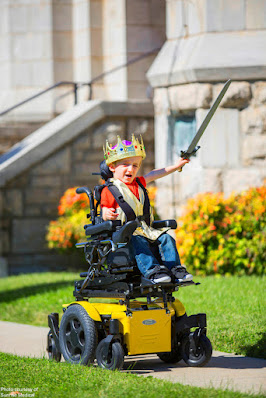
Whenever I think about Halloween, I’m immediately transported back to my childhood. I can feel the golden sunlight paint my forehead and the cool breeze brush against my cheeks. My brother and I are playing in the cul de sac, dressed as Michelangelo and Donatello from the Teenage Mutant Ninja Turtles, while one of our friends is dressed up as a zombie, and our other friend wears a Power Ranger costume. This scene seems pretty typical, right? In your mind, does it change at all when I tell you that I was zooming around the street in my power wheelchair?

Halloween is fun for children with and without disabilities. My friends never treated me differently, and helped me work around areas that weren’t accessible. If there was a car blocking the walkway to the front door, I’d wait on the sidewalk where the owner of the house could see me. I’d sit patiently, a smile blooming across my face, as my brother approached the front door and rang the doorbell. Whenever the door opened, my brother would point in my direction and mouth something that I couldn’t hear. Then he’d mosey down the driveway, the adults following just behind. I would tell them “Trick-or-Treat!” and they’d drop a few pieces of candy in my bag.

Regardless of their disabilities, we want our children to enjoy this holiday as much as possible. Unlike my experiences, many children have sensory sensitivity, especially those with autism or other types of cognitive disabilities. To make sure that these trick-or-treaters feel as comfortable and safe as possible, it can be helpful to slowly introduce them to Halloween-themed decorations and costumes. And just in case you need a few pointers, here are some tips to help you get ready for the spookiest day of the year.

Preparation

If your child has sensory aversions, try to be as careful as possible, and mindful of any triggers that they might have. Here is some advice for teaching them in a patient, accepting, and safe environment.

  • Spiderwebs, ghouls, and shrieking goblins: As decorations begin popping up around town and in school, telling stories from your own childhood may help to alleviate some tension. Make sure not to expose your child too quickly, or to too many of these at once, since that could result in something like sensory overload. It may not seem like it, but be mindful that this can actually be painful for autistic people.
  • Superman, monsters, witches: By visiting stores with costumes on display, by browsing catalogs filled with Halloween characters, or by playing dress-up at home, you can learn about your child’s preferences, what they like, what makes them uncomfortable, and how to help them navigate that space. It might help to explain that costumes are made up of clothing and props, and that they don’t involve magic or don’t have to be scary.
  • Masks: Halloween masks can also make children uncomfortable. If your child feels uncomfortable either wearing a mask, or being around people who are wearing them, they might be afraid because they no longer recognize their family and friends. As you can imagine, this can be not only terrifying, but also disorienting. Try to look for masks that your child is comfortable wearing. You can even have him/her test out their mask and costume by looking at themselves in a mirror, and by making sure that they know you’re there. For some children, a simple game of peek-a-boo with a mask can also help them feel more  comfortable. If your kid enjoys art, helping them to create their own masks can also help.
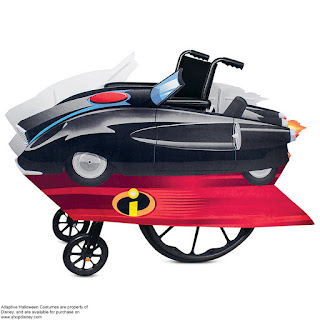
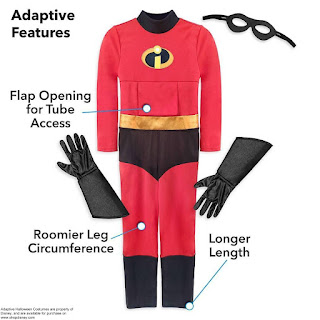
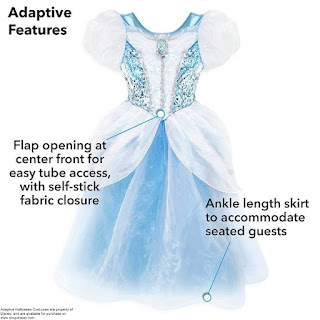
  • Finding an accessible Halloween costume: If you’re searching for an accessible costume for your little trick-or-treater, it’s important to pay attention to any sensory aversions that they have, as well as any adaptive equipment that they use. There are actually some great accessible costume lines, some of which even transform wheelchairs into fantastic props, such as a spaceship or a car. Other costumes have pockets or cutouts that will still allow you to access feeding tubes and other equipment. These designs are also tag-free, and made from materials that are less abrasive to children with sensory sensitivities. Target and Disney even offer accessible costumes that feature popular characters, such as Disney princesses and characters from their popular movie “The Incredibles.”

Click here to see some great, and sometimes funny, DIY costume ideas for people with disabilities!

Plan Ahead

1. Is It OK To Avoid Crowds? – Of course! Crowds aren’t everybody’s favorite or ideal situation, and may be especially triggering for people with disabilities. For kids with a variety of disabilities, crowds can be loud and overwhelming. Noisy, unfamiliar events can be overstimulating for autistic children, which can be extremely painful, uncomfortable, and impossible for them to endure. To help your child have a great time, in a way that accommodates their needs, here are a few ideas:

Instead of participating in trick-or-treating areas that have a lot of traffic, it may help to travel to areas that aren’t as busy. If your child and their friends would be open to starting earlier, this may cut down on the amount of traffic that you’ll have.

Search for Sensory Friendly events, either online or through friends and other parents. If you don’t have any near you, maybe you and some other parents could even start your own!

You can avoid the crowds by staying home, watching fun Halloween movies, and even making your own, Halloween themed desserts.

It’s also an option to allow your child to give out candy from home. That way, they can experience the holiday at their own pace, and might help to familiarize them with Halloween from a distance, in an environment that is already comfortable.

2. The Perfect Amount of Time – Too many events, or events that are too long, might be incredibly overwhelming for some children with disabilities. What are some ways you can enjoy the holiday, that aren’t over-stimulating?
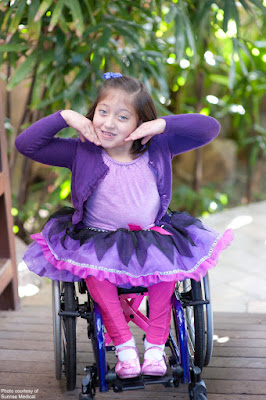
Haunted houses can be a lot for anybody, but can be especially stressful for people with disabilities. Some more accessible options can include less-stimulating activities like corn mazes, hayrides, or even a trip to a Halloween store. And if possible, as mentioned in our other examples, to avoid crowds, plan to go during a time that is less busy.

Depending on the type of event, you may want to ask some questions before RSVPing “Yes” to a Halloween party or event. You can ask about the number of guests, whether music will be played, or even about things like strobing lights.

3. Be Patient With Your Child And Yourself – Sometimes special needs children won’t enjoy dressing up and participating in the event you have planned. Be patient and come up with alternative costume options or start new traditions that are more comfortable for your child.

 As much as you want them be actively involved,  remember that Halloween might just be too much. Keep your child comfortable by allowing them to have a voice and tell you what they like or don’t like.

Try to find good ways to connect with your child. If something about the event might spark some interest for a short amount of time, it might be easier for you to enjoy the event with them.

It doesn’t all have to go as planned or the way you imagined. Having a special needs child doesn’t mean that you can’t enjoy Halloween, you just have to come up with different ways to enjoy it with your child in a way that is comfortable.
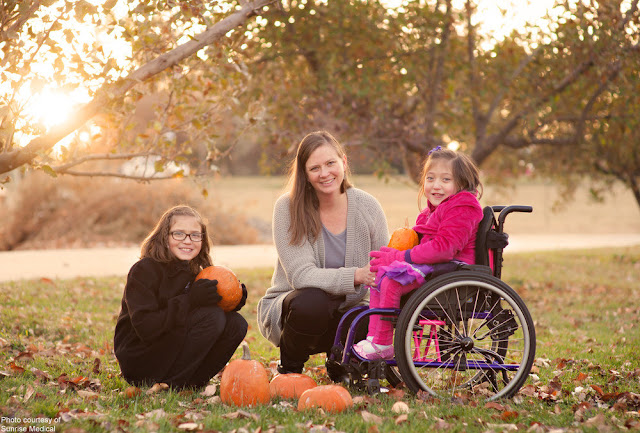
4. Mapping Out a Trick-Or-Treating Plan

Role-play- Acting things out can help your child prepare for Trick-Or-Treating, may even be fun in the process. By using a door in your house, you can practice things like how to knock on a door or ring a doorbell, what to say when a door is opened, how to thank the person, as well as the correct time to say goodbye and leave.

Discuss the language your child may encounter- Since we don't go around yelling “Trick-Or-Treat!” during any other time of the year, talking about it could help them adjust to this new phrase. After all, people only Trick-Or-Treat on Halloween, so it might help to point that out to your child.

Create an itinerary beforehand- Some children, especially those on the spectrum, feel much more comfortable when they have a schedule to follow. If they aren’t keen on Trick-Or-Treating planning to go out for a few minutes, just to visit a few places, could be a great place to start.

Do a walk-through of the neighborhood ahead of time- This part can also be fun, and can give your child a sense of security and control. By choosing which houses you’ll visit, it may alleviate any uncertainty or anxiety that your child is feeling. It could also help to speak with your neighbors before visiting their houses. If they don’t know about your child’s disability, this may offer a great opportunity to speak with them about it.

These tips are a great starting place for any parent, who has a child or children with disabilities. Hopefully, they help you to have a more inclusive holiday that your child will love.

Click here for a few more tips!

Credits

SYNERGY HomeCare from a blog post written in 2018

NYMetroparents.com: "Celebrate Halloween In An Accessible Way"

Authors


Mary Carol Peterson
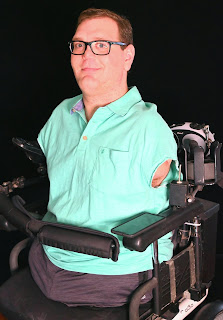


Kyle Romano


Editing & Production

Kyle Romano

Wednesday, September 30, 2020

Florida Accessible Beaches and Outdoor Spaces

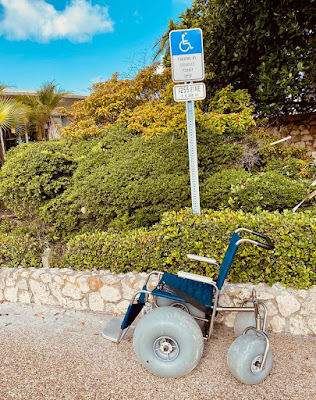
A beach wheelchair with balloon tires is shown sitting atop gravel, parked underneath a "handicapped parking" sign, with shrubbery in the background.Recently, many people have begun to rediscover their love for nature. As Floridians, we are lucky to have access to beautiful beaches, parks, and other, wheelchair accessible spaces. These places are perfect for having fun, while continuing to practice social distancing. So pack your PPE masks, umbrellas, sunscreen, and phones! Here are some accessibility tips to help you make the most out of Florida’s great outdoors.

When most people think of our subtropical state, they likely imagine picturesque palm trees, beaches, and the open ocean. Let’s begin by exploring some of these natural treasures, and take a closer look at some amenities that are accessible for wheelchair users.  


You’ll notice that some locations offer accessible mats. Once thought impossible, Mobimats allow wheelchair users to roll themselves onto the beach! Click here to learn more about these incredible mats. If you are a wheelchair user who’s itching to get shoreside, need, here’s a pro tip: before making the trek out to your favorite, accessible beach, give your city/county a call to make sure that Mobimats are available. Accessible beach mats are rolled up during sea turtle nesting season, which may affect your beachly adventures.

A boardwalk ramp is shown, leading down to the beach. Bright skies and white sand are in the backgroundHave you ever seen one of those wheelchairs that sport big, balloon tires? If you want to feel the salt on your skin, these beach wheelchairs can be a great way to cruise the dunes. There are several locations in Pinellas County, including Fort DeSoto Beach, where you can rent a tropical chariot. The best part is that you can usually borrow these at the low price of... free! These chairs make it easy for wheelchair users to glide over pesky sand with ease. 

Though Gulfport Beach is missing from the aforementioned list, a Mobimat was installed 2019. 
Treasure Island Beach also boasts a Mobimat, which you can learn more about by clicking here. But what else does Pinellas County have to offer? Click here to explore some more Florida beaches, learn more about St. Petersburg’s accessibility.

St. Pete Pier is shown, with calm water below, and blue skies filled with white clouds above

More Outdoor Spaces To Explore 
Since the St. Pete Pier was recently remodeled, it is very accessible, and features lots of room for social distancing. From there, you can even enjoy the beautiful views of Tampa Bay and Downtown St. Pete. Thanks to its flat terrain, the entire pier is easy for wheelchair users to explore. The ramped area makes it easy to get closer views of the water, and who wouldn’t want that? It is a pier, after all. While seeking out St. Pete’s secrets, you can check out a variety of local art projects and learning centers, including the murals, the Bending Arc, and the Discovery Center!

A black & white picture of Bok Tower, with palm trees in the background.If you’ve been searching for a National Historic Landmark, look no further than Bok Tower Gardens. Located in Lake Wales, Florida, this beautiful attraction was originally founded as a bird sanctuary by Edward and Marie Bock. It boasts over 100 species of birds and encompasses more than 200 acres. The “Singing Tower” Looms a whopping 205 feet tall. Almost all of the area is wheelchair accessible, including handicapped parking and restrooms. It’s is open to the public year-round, so make sure that you don’t miss out!

If you are a person who likes variety, Florida’s state parks offer some of the most diverse environments. Whether you need to cool off in our natural springs, or want to venture along scenic trails in search of wildlife, there’s a little something for everybody. Wheelchair users should keep in mind that clear, paved, or gravel-covered paths are the easiest to tread. And if you have a cognitive disability, some parks provide literature that will tell you everything you need to know about high-traffic areas, as well as the sights and sound that you can expect. 

Click here to learn more about the accessibility of Florida state parks.
Click here for another great resource, covering the 5 most accessible
parks in Florida.
Click here for a map, which can help you find more accessible, Florida State parks.

A couple sits on on a bench, in a park, with green grass surrounding them and a lake in front of them.
Myakka River State Park is near Sarasota, and offers some unique experiences for wheelchair users. In addition to experiencing their Birdwalk, you can even take a tour of the park by an accessible tram or boat. This river is Florida’s first state-designated, wild and scenic river. It flows through a vast expanse of unspoiled wetlands, prairies, hammocks, and pinelands that make up Myakka River State Park. Click here to learn more.

Sea birds perch on rocks protruding from the ocean.If you are a fan of wildlife viewing, the Little Manatee River State Park is famous for it! The park protects over 2,400 acres of habitat for hundreds of common, Florida species, in addition to dozens of rare and listed species. Make sure to venture into this park at sunrise or sunset, when it’s best for wildlife viewing. Don't forget to bring a pair of binoculars, a camera, and a trail map!

Homosassa Springs Wildlife State Park is located about 2 hours north of Tampa, and has accessible walkways for viewing different breeds of Florida birds, in their natural habitat! There’s also a manatee viewing area. Click here to learn more.

If you are searching for an accessible park near Gainesville, the Ochlockonee River State Park is just north. Sporting a renovated boat launch area, it provides access to the Ochlockonee River, as well as surrounding creeks and waterways. Paved sidewalks lead to a floating boat dock, paved ramp, and even a separate kayak launch that’s wheelchair accessible! Sidewalks lead from the parking lot of the day-use area to a number of fun areas, including: two picnic pavilions, the swimming beach, playground, river shoreline, as well as an accessible outdoor shower and drinking fountain. Click here to learn more.

A man in a blue shirt sits next to his wheelchair, on the beach, as he looks at the ocean.

With all of these wonderful parks at our disposal, what are we all still doing inside? Let’s get out there and enjoy all of the accessible activities that Florida has to offer!

Authors
Mary Carol Peterson
A profile picture of Mary Carol Peterson, holding a clipboard and tape measure as she smiles for the camera.


Kyle Romano


Edited by:
Kyle Romano

Thursday, October 31, 2019

Accessible Travel Tips For Land, Sea, & Air

With the holidays quickly approaching, people will be travelling to visit friends and family from all over the world! Traveling is a wonderful opportunity to broaden your horizons and experience new places, people, and foods. Sometimes, the challenges of traveling with your wheelchair and/or other adaptive devices can put a damper on things. Surprisingly, planning ahead can minimize most of that hassle. Remember: getting there is half the fun! Here are some quick tips to help you get ready for your next adventure! 

Equipment Check-Up

  • Before heading out, it’s important to make sure that your wheelchair, scooter, lift, and accessible vehicle are ready to travel. It’s a great idea to have your equipment serviced before you go. Better to be safe than sorry!
  • Our Accessible Living articles have some great tips for power and manual wheelchair users, including some great service recommendations. Click here to learn more.

Don’t forget us! Our service team at Custom Mobility can make sure that your equipment is in tip-top shape. Before you hit the road, we’d be happy to check your accessible vehicle, lift, and/or wheelchair. Feel free to give us a call at 800-622-5151, or visit https://www.custom-mobility.com/mobility-services to schedule an appointment. Remember, in case there any parts that may be needed to ordered, be sure to perform any maintenance to your equipment at least 3 weeks in advance.

Air Travel
We can all agree that it’s quicker to travel by plane than it is by car. For wheelchair users, flying is a bit more involved than it is for able-bodied passengers. To learn a bit about guidelines for traveling by airplane, click here. Please note that all travelers must be screened. If you need more assistance, feel free to call the TSA helpline, 72 hours ahead of time at: 855-787–2227.


Unfortunately, airplane aisles are too narrow to accommodate manual or power wheelchairs. If you are a wheelchair user, it is probably best to inform the airline that you need an aisle chair. These devices are the perfect size for squeezing into those narrow aisles and can get you to your seat. Since transferring can be difficult, requesting a seat located in the bulkhead and/or a seat with flip up armrest, will make the process so much easier.

Ever get that feeling like you’re forgetting something? Let’s take a few precautions to be sure that nothing from your wheelchair goes missing! By securing anything that could be separated from your wheelchair, such as cushions, footrests, armrests, etc., you’ll be more like to disembark the plane with all of your belongings intact.

For wheelchair users that have therapeutic cushions, taking this item on the plane will make sure that it isn’t lost, and will help to prevent any skin issues from occurring during the flight. 

Not all ground workers are familiar with wheelchairs. Before you head to the airport, be sure to type up instructions for assembling and disassembling your equipment. It’s also a good idea to speak with the crew, and explain how they should handle your wheelchair.

Expect the best, but prepare for the worst. In case something comes loose or needs adjustment, travel with a small tool kit. If you can, it’s always a great idea to travel with spare parts, such as tires, tubes, etc. If you plan to remain at your destination for an extended period of time, these items not readily available in most stores.

Once you make it onto the airplane, it might be difficult or impossible to move about the cabin. Most airline lavatories are extremely small and difficult to maneuver in. To prevent yourself from needing to use the restroom during transit, it’s a great idea to use the restroom before you board the plane.

Getting around once you land
For wheelchair users, hailing a taxi isn’t always an option. If you need an accessible taxi, here is a list of taxi services that offer accessible rides. In selected cities, Uber and Lyft might offer accessible transport.

For those who can drive with low-tech hand controls, some rental cars can be equipped with portable hand controls. Please call and the check availability with each rental car company.  

In case you need a ramp or other accommodations, it’s possible to rent a Wheelchair Accessible Vehicle at your destination. For those coming to the Tampa Bay Area, Custom Mobility has a fleet of accessible vehicles for rent. Just give us a call!  


Road Trips and Accommodations
Staying with family or friends is a great way to save money! If you’re staying at a new location, it’s important to call ahead and ask accessibility-related questions. Don’t forget to ask family and friends to measure entryways, paths, door widths, bathroom space, and bed height. Stairs are like roadblocks for wheelchair users, so be sure to ask if your temporary residence has any. Just in case, it’s always a great idea to purchase a portable ramp and carry it with you. 

For the more adventurous at heart, staying at a hotel is always an option. Proper planning includes making a reservation for an accessible room. A hotel with 200 rooms is required to have eight rooms with accessible bathrooms. Of those, only two are required to have a roll-in shower. Smaller hotels, which have less than 50 rooms, are not required to provide roll-in showers. Remember, planning is key!

Accessible bathrooms typically consist of a bathtub and a bench. This accommodation typically which doesn’t work for those who use a roll-in shower chair. Calling ahead can help you to figure out whether the hotel has accessible bathrooms and, if so, which type they are. For the adventurous at heart who travel often, it might be a good idea to purchase a portable, roll-in shower chair. 

Room size matters too, especially because a wheelchair can take up a lot of space. A suite is often a good idea and might be a good alternative for those occasions when accessible rooms aren’t available. These are better than standard rooms because they offer more space and more bedding options, which is especially great for those traveling with companion. 

When traveling internationally, it’s easy to forget that ADA guidelines are not applicable. Before adventuring to other parts of the world, take special care to research accessibility items such as: curb cuts, steps, door width, elevators, and accessible bathrooms. 

Travel by an accessible RV can be another fun way to hit the road. What’s better, is that you only need to unpack once! Information outlined above, regarding accessible bathroom space and bedding, also applies when renting an accessible RV.

Cruising
Online research is a great way to learn about various cruise lines. Be sure to type “special needs“ or “accessibility” into the search bar, and call the company if you have additional questions. 

Be sure to check their policies on accessibility, especially if you plan to travel alone. 

Travel agents, especially ones that specialize in travel for people with disabilities, can be an incredible resource. These individuals are extremely familiar with the ships, port access, and accessible excursions. They can even arrange for pre- and post-cruise accessible hotel rooms. 

Cruise travelers who have disabilities, may need things that most people don’t consider. Click here to learn about nine of the best cruise lines for people with disabilities.

Wherever you go, enjoy the ride! By taking the proper precautions and preparing for every possibility, you can finally relax and have fun! Life is too short not to. Here’s to wishing you safe travels!

Author:
Mary Carol Peterson

Wednesday, October 16, 2019

Exploring the Stables: A Day At Quantum Leap Farm

As a soon-to-be physical therapy student, I have always been interested in hippotherapy, which uses horses as a unique form of physical therapy and rehabilitation. Recently, I got the chance to visit Quantum Leap Farm, a therapeutic riding center in Odessa, FL. Here, people with disabilities, and of all ages, can come and reap the benefits that horseback riding has on the mind and the body. After watching my friend Bryanna, during her therapeutic riding session, I was able to interview the director and founder of the company, Edie Dopking. From her, I learned a bit more about this form of riding, and what it is all about.

Unlike most horse farms, which specialize in pediatrics, Quantum Leap Farm has a wide variety of clientele. For founder and executive director, Edie Dopking, Veterans are among the original population of interest . Because multiple members of Dopking’s family are affiliated with military, this was a huge population of interest. When asked why she started this company, she went on to describe her background in horse riding, and work at similar therapeutic riding companies. When working with other farms, she questioned why the benefits of horse riding were only geared towards children. By starting her own non- profit organization, she decided to branch out to a larger population. In addition to serving a larger variety of demographics, Edie Dopking also went on to explain the larger variety of services and programs, offered at Quantum Leap Farm.

The services offered at Quantum Leap Farm vary, based on your interests and goals. Therapeutic riding focuses on horsemanship, learning riding skills, and disciplines. Hippotherapy is a form of physical, occupational, or speech therapy, that uses the movements of a horse to improve a client’s mobility and functionality. Unlike therapeutic riding, hippotherapy focuses more directly on the physical needs of the client, and is recommended, or referred, by a PT, OT, or speech therapist. In addition to physical, therapeutic benefits, Quantum Leap Farm offers specific services, geared toward mental health. For instance, the program At E.A.S.E stands for: Equine Assisted Self Exploration. From company retreats, to bolstering the recovery of traumatic injury in our veteran population,, to family therapy sessions, these services allow a wide-variety of people to find themselves, while finding a love for horses.

The health benefits of riding also vary based on the service in question. Each session and service is tailored to the needs of a specific client, similar to that of physical and occupational therapy. Among other benefits, therapeutic riding focuses on improving balance, coordination, self-confidence, and stamina . Depending on the specific needs of each client, Hippotherapy can improve muscular strength and endurance, posture, range of motion, proprioception, and much more.

When discussing the medical benefits of therapy, it is nearly impossible to leave out the mental and social benefits that come with it. Therapy is multifaceted, and although health professionals are quick to focus on numbers and physical changes, the mental and social benefits can be just as influential. Those that ride here, don’t simply develop a deep connection with their horse; additionally, they build a meaningful connection with the community of people that come out to ride!

Want to learn more about therapeutic riding and hippotherapy?

Click here to visit Quantum Leap Farm’s website.


Click here to learn more about the benefits of riding.

Author:
Kailee Sylvester

Thursday, October 10, 2019

Combining Riding Perspectives

An image of a young woman, who is wearing a blue helmet and riding a white horse. They traverse a sandy floor, within a covered riding area, followed by a lady.When discussing therapeutic riding, or just therapy in general, it’s hard to talk about medical benefits without talking about mental and social benefits. Based on their experiences, people have different perspectives on disability. As a result, people focus on certain aspects of disability more than others. In this way, health professionals, or future health professionals, like myself, tend to focus on the numbers. We tend to favor this kind of data, because they are physical changes that we can see and record. We tend to favor this kind of data, because they are physical changes that we can see and record. On the other hand, the riders aren’t worried about a 2% increase in range of motion. These individuals are more interested in their new abilities, and how they change their: feelings, interactions, and perspectives. Disability isn’t something that can be viewed as purely medical, or purely mental. In reality, it is a bit of both.
A woman is shown in blue, standing next to a dark horse with white legs, holding the reigns
Arriving at a place like Quantum Leap Farm, you can expect to deal with a few dirt and gravel roads. When you pull in, you see everyone getting ready in the stables. If you happen to get there a little early, you may be able to go over to the stables to hang out with the horses. One of the riders, Bryanna, says that it is “a great way to get your mind in the right place. Connecting with the horses allows you to focus an disconnect from the stress of the outside world.” Once your horse is chosen based on their experience and temperament, and the horses are ready to go, they will be lead out of their stables, and into the covered arena. There, you get to ride.


Two, brown saddles are shown next to each other
Each horse is “tacked up” based on the riders ability and needs. For example there are two main types of saddles: western and english. The western saddles (pictured left) have what is called a horn, which allows you to hold on if you need to. English saddles (pictured right) are your traditional saddle, and are used by people that can fully support themselves. Some people will use a surcingle, which is basically a pad with handles, to get more contact with the horse for a more challenging ride and a better stretch. As far as reins are concerned, most people either use a bridal, or snap reins, depending on their ability to control themselves and the horse.
A woman is receiving assistance to transfer from her wheelchair onto a horse's saddle. Two people are standing next to the horse, watching the transfer, while another person watches in the foreground
Once they have the saddle and reins they need, instructors will help you mount the horse. Depending on your level of experience, or how comfortable you are with the horse, this process can vary. As shown, some use a lift, while others may use a type of stepping stool to give them a bit of a boost.

The rider, wearing a pink shirt and blue helmet, is standing on a transfer platform to the left of the horse. She is bending over and resting a hand on the horse's neck. An individual is assisting her, standing next to her on the platform. Another individual is looking up at them, from the ground belowAfter you are on your horse, to get comfortable with the horse, and to help you learn the basics of riding, you start by taking a few laps around the arena. Whether it be to learn or master a new skill, work on core strength, practice a new pace, or more, every session has a bit of a different focus. Some lessons will also be done in groups, where riders cans play games or do other activities together. One of Bryanna’s favorite group activities was creating synchronized routines, almost like dancing! Within that hour-long session, you could end up doing obstacle courses, practicing different riding positions, going from a walk to a trot, or stretching, and doing upper-body exercises while riding. Each session is what you make of it, and like that of most therapies, it is molded to your wants and needs. Feel free to speak up!

Posters that describe events happening on the farm.This farm has created a riding community. I emphasize the word “community” for a reason. Riding brings people together, allowing the able-bodied to interact with people with disabilities. It also allows people with disabilities to meet and network, with other people who have disabilities.
Bryanna rides a white horse with light grey spots. It's being led by somebody outside of the picture's frameWhen talking to Bryanna, she said: “In considering my own experience, coming to the farm was the first time I had really interacted and with and formed relationships with people facing similar struggles to myself. In addition to this, we connected further because we shared a mutual love for the horses and the programs that help us to achieve so much. The staff which work at the farm are also incredibly supportive towards all the participants. They always encourage us to do our best and not to focus too much on our mistakes because every rider makes them regardless of ability. It is comforting to have their support and I think of everyone at the farm as my second family.”

Click here to get involved and learn more about Quantum Leap Farm.
Find Quantum Leap Farm on Facebook
Click here to learn more about therapeutic riding and the Professional Association of Therapeutic Horsemanship
Click here to learn more about hippotherapy through the American Hippotherapy Association at 

Images courtesy of: https://www.equisearch.com/articles/english-vs-western-riding-17557

Author:
Bryanna Tanase
On the left of the frame, a brown horse looks at the camera. On the right of the frame, Bryanna extends a hand toward the horses face, kissing him on the nose

Adaptive Skate and Wheelchair Motocross: A New Frontier

A manual wheelchair user is shown, gliding parallel to the lip of a ramp, waiting to drop in. He is wearing a bright green, motorcycle helmet, which matches the bright green frame of his wheelchair.ASF Adaptive Sports, based in St. Pete, recently hosted the First Annual Adaptive Sports Jam. In February, this event showcased WCMX (Wheelchair Motocross) and Adaptive Skate. Fittingly, the event was held at the newly constructed, St. Petersburg Skatepark.
The skatepark was part of an initiative to revitalize the Campbell Park area. On a daily basis, many able-bodied skateboarders, BMXers, and scooter riders, use the park. ASF Adaptive Sports Director, Tony Torres, worked closely with the St. Pete Skatepark Alliance to ensure the skatepark was accessible to wheelchair users. This effort, supported by wheelchair athletes and able-bodied action, sports enthusiasts, has sparked major interest in WCMX and Adaptive Skateboarding. As a result, they have become two of the fastest-growing, adaptive action sports. Their positive effects increase mobility, strength, and coordination. Additionally, they’ve created a positive community, where both people with disabilities and able-bodied people can grow, together.
A child, wearing a bright green and black helmet and blue sunglasses, is propelling his a bright green, manual wheelchair. His helmet has a plastic, green mohawk sticking out of the top. Next to him, a boy in a white shirt and red sunglasses, turns his head to look at the camera.So, who’s behind this incredible sport, and what’s their mission?
ASF Adaptive Sports is a division of the Action Sports Foundation, a Florida-based 501©3 charitable organization, whose Mission is to promote responsibility and goodwill throughout the community. They achieve this goal through actions sports. Their primary focus is to provide safety-based training, as well as youth and adaptive sports programs. Through this initiative, they seek to bring the able-bodied and adaptive communities together. ASF Adaptive Sports also serves as a resource for action sports athletes, organizations, and the industry.
A main in a grey shirt, riding in a bright green manual wheelchair and wearing a matching motorcycle helmet, is shown talking to a young man who is also a manual wheelchair user. He rests his hand on the wheel of the other person's wheelchair. The young man is wearing a bright orange shirt. His wheelchair and motorcycle helmet match his shirt.

Tony Torres is a local, WCMX pro athlete, and Executive Director of ASF Adaptive Sports. He has competed at the WCMX World Championships 3 times prior to this last competition in St. Pete where he placed 3rd. “It’s a dream come true seeing all the kids out there learning and having fun, trying a new sport that ultimately helps their confidence and self-esteem, on and off the skatepark,” said Tony Torres.

A manual wheelchair user is shown holding the wheel of a younger, manual wheelchair user positioned to his left. They are both wearing motorcycle helmets, looking over the quarter pipe in front of them.To help with the official judging, clinic programming, and competition announcements, ASF brought SOCAL WCMX, and Action Park Alliance Skatepark, from Fontana, California. These groups are comprised of leaders in the WCMX community, and train top WCMX athletes, on the west coast. They host clinics, programs, and play an important role in governing this exciting, new sport.

“It’s truly important for ASF to build a bridge from the west coast to Florida, to make sure our local athletes are getting the latest information in these new, action sports,” said Tony.
A man in a bright green, manual wheelchair with a matching helmet, is shown repairing another person's wheelchair. Its wheels are removed, and he is tinkering with the bear frame of the wheelchair. The wheelchair's owner is wearing a bright orange shirt and matching helmet, sitting on the ground and looking at the camera while his wheelchair is being repaired.

Among those who attended the 2019 ASF Adaptive Sports Jam, were a few of the top, WCMX and Adaptive Skate athletes in the world. They assisted in judging the heats, and included: WCMX World Champion Aaron Fotheringham from Nevada, 2nd place winner Blake Simpson, from California, and Jerry Diaz, from Orlando. The competition was both fierce and diverse, featuring talent that spanned across age, ability, and gender. Competitors included Tracie Garacochea, from California, and Tia Pearl, from Illinois. These ladies are two of the world’s top competitors in the sport.

A woman in a black shirt, black and yellow motorcycle helmet, and orange kneepads, drops in a quarter pipeWCMX wasn’t the only presence in the skatepark. Adding to the event’s diversity was an Adaptive Skate competition for amputees. Witnessing competitions for different sports, and competitors of varying abilities, was a spectacle to behold! Adaptive Skaters like Ernie Ibarra, from Arizona, Oscar Loreto, from California, and Justin Beauchesne, from St Pete, showcased their talent and the potential of adaptive athletes.

A man in a bright green, manual wheelchair and matching helmet, is shown balancing as he grinds his wheelchair across a railing.Often, it is assumed that impairments can prevent people with disabilities from competing and having fun. These athletes are great role models for children with disabilities, who may feel intimidated by their own impairments. They can roll, jump, and crash their way to success, just like their able-bodied counterparts. When it all comes down to it, we all experience highs and lows. If our experience at the skatepark has shown us anything, it’s that determination and perseverance can help to overcome seemingly impossible obstacles.
A man in a bright green wheelchair with a matching motorcycle helmet, is shown pushing a boy in a small, blue, manual wheelchair. The boy is wearing a blue, motorcycle helmet.
Next year, this great event will be back, at the same venue, in mid-February. Stay tuned for details!
Click here to join the ASF Adaptive Sports community
Click here to visit the ASF Adaptive Sports Facebook page
Click here to learn more about ASF Adaptive Sports
Click here to watch a video from the ASF Sports Jam
Author:
Mary Carol Peterson
A picture of the blog's author, Mary Carol Peterson, holding a clipboard an pencil, smiling for the camera.

The Benefits of Therapeutic Horseback Riding: From the Rider's Perspetive

Bryanna, dawned in a helmet and holding a set of reigns, is riding a horse across a sandy floor.This blog is the first installment, in a three-part blog series, where I’ll describe the benefits of therapeutic horseback riding. The main goal of this series is to raise awareness about horses, what they can do for people with disabilities, and, to encourage more people to participate in horseback riding. Many are unaware that riding is even an option. This installment in the series will focus on my emotional, physical, and sensory experiences, as a participant in a therapeutic riding program, at Quantum Leap Farm.


Bryanna is seated atop a white horse with grey spots. She is smiling and looking down at the camera.
Before I get into the meat of this post, allow me to tell you a bit about myself. I was born with a severe form of cerebral palsy, which affects my ability to walk, my fine motor skills, and my coordination. As a result, I am a wheelchair user. Since I was young, horses have fascinated me; however, I wasn’t able to fully interact with them until I turned seventeen years-old. In addition, I learned about the benefits of therapeutic riding from a family-friend. Experiencing them for myself was a different story.

Bryanna is wearing a pink shirt and black riding helmet, laughing and smiling widelyCurrently, I have been riding two Saturday’s a month, for two years. Every minute of it is an absolute joy. Riding gives me the independence I so often crave. Instead of feeling confined to my wheelchair, riding imbues me with this powerful confidence that leaves me feeling as if I can do anything. Not only does it provide me with freedom, but it also builds my strength as well. Since I began riding, my balance has greatly improved. Each lesson tests my coordination and ability to multitask, while simultaneously strengthening my body. During lessons, I participate in a variety of activities, including: obstacle courses, stretching, trail rides, dressage tests, and playing games with other participants, such as red light, green light.
Bryanna is seated atop a brown horse. They stand on a field of bright green grass, a lake behind them, a fellow horse and rider beside them
While at Quantum Leap, I find that some of the best moments I have had, occurred when I was not on a horse’s back. I help to groom the horses a few times per month, and often spend time with them after lessons. All the horses are super gentle, and absolutely love treats. Whenever I stroke their muzzles, or groom them gently with a curry comb, a calm feeling always washes over me. There is something instantly healing about the horses. Their smell, their unconditional love, the moment when their lips touch your hand to grab a treat, and that special feeling in your heart, when they come to you after you call their name, are what make horses magical to me. They are some of the greatest friends you could ask for, are great listeners, are endlessly affectionate, and are just the greatest creatures I’ve ever had the pleasure of interacting with.
Bryanna is reaching up to pet the nose of a brown horse. She's wearing a grey shirt, grey leggings, and a grey USF hat.
Another emotional benefit of participating in this program, is that it has introduced me to community of people, who both relate to, and support me. Until I came to the farm, I had never met anyone else with a disability. Getting the chance to know a few people with disabilities, has been very important to me. The staff are also very supportive and caring. You can come to them about any problem, and they will try their best to give you some advice. I consider everyone at the farm as my second family. Through the support of the community, I have had the pleasure of speaking about my experiences as an ambassador, in the therapeutic riding program. This opportunity is not only a chance to assist the farm in their efforts, but also to advocate for the disabled community.


Bryanna smiles on the back of a brown horse. Two women are standing on either side of them.
In conclusion, horseback riding imparts many physical, emotional, and social benefits, to persons with disabilities. These include: improving balance, giving people with disabilities a sense of community, and raising their confidence. If you, or a loved one with a disability, has the resources and would like to attempt therapeutic riding, I highly encourage you to do so. Horses have changed my life for the better, and I’m so grateful for everyone who has allowed me to have this opportunity. To learn more about Quantum Leap Farm, click here to visit their website.
A brown horse stands with its head sticking out over a gate. Bryanna reaches up to pet his nose
Additional resources
Professional Association of Therapeutic Horsemanship International (PATH)
The American Hippotherapy Association
What’s the Difference Between Hippotherapy and Therapeutic Riding?
Therapeutic Effects of Horseback Riding Interventions: A Systematic Review and Meta-Analysis
Utilization of Hippotherapy and Therapeutic Riding for Children With Disabilities as an Adjunct To Traditional Therapies

Author:
Bryanna Tanase
On the left of the frame, a brown horse looks at the camera. On the right of the frame, Bryanna extends a hand toward the horses face, kissing him on the nose

Kiley Griggs and The College Quest

For many people, attending college is viewed as a rite of passage. F rom TV shows, to movies, to books, and everything in between, w e'r...