Monday, June 13, 2022

Accessibility Review: St. Pete Pier and Museum of Fine Arts

Accessibility Grade: A-
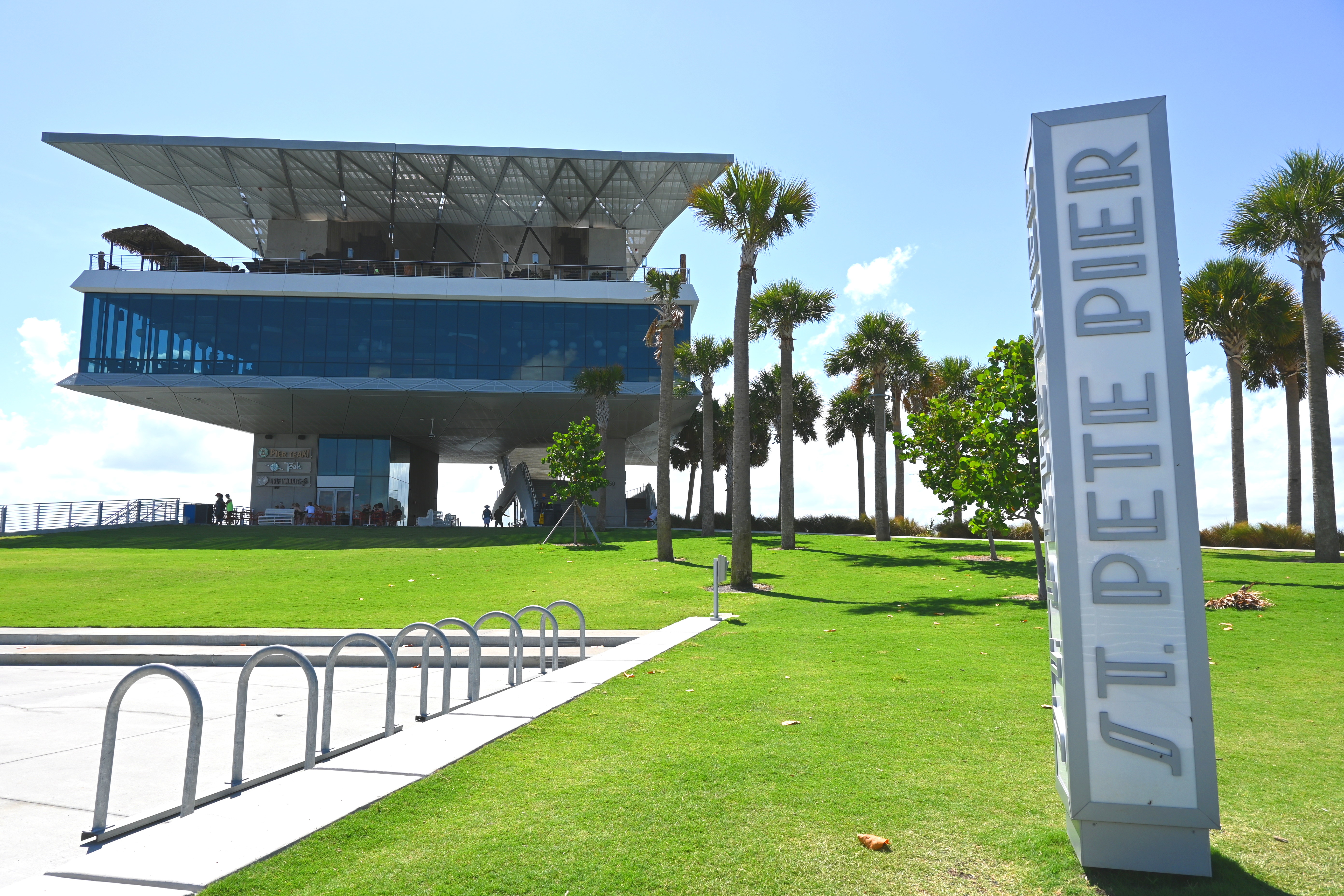
Even though this review contains two locations, we decided to include them both in the same post. After recent renovations, the St. Pete Pier reopened in July of 2020. Both it and the surrounding areas are surprisingly accessible, and accommodate a wide range of disabilities. Parking is one of the biggest obstacles, which requires pier goers to access a pay station. Other than that, the park, and even its boardwalks, are pretty easy to access.

The St. Pete Museum of Fine Arts is huge, and offers plenty of room for wheelchair users to navigate the exhibits. Most of the works are eye-level for people who use mobility equipment, and are easy to approach, with little to no barriers. Just be careful not to bump into anything, because these works of art are priceless!


*Note*

Though there was a decent amount of accessible parking, you must pay a fee to park (detailed below). The park itself had wide sidewalks, shaded areas, benches, and even free sunscreen dispensers. There is an area with beach access, which features an accessibility mat for wheelchair users (note that this only reaches about a quarter of the way to the water).


The St. Pete Pier has a number of parking lots, some of which are closer than others. This picture shows two accessible spots, with an unloading zone in between them, a ramp located at the top of the unloading zone, and a ramp leading to the pay station and into the park. If you are a wheelchair user or have a disability that impacts your ability to walk long distances, it would be a good idea to park as close as possible. Click here for the locations of these lots, and for the parking rate. Until writing this review, I wasn't aware that payment can be made with a mobile app called ParkMobile, which you can access by clicking here. Since I needed my friends' help to access the kiosk shown above, paying with ParkMobile would've been much easier for me to access. We were told that there was an accessible shuttle, but didn't have a chance to follow up on it.

After we got out of my van, I was surprised to find a free sunscreen dispenser. Painted a bright blue, this cylinder is pretty easy to see, and is located next to an interactive map. This feature is incredible for people who have either sensitive skin or skin conditions. Since this dispenser is operated with a pedal on the floor, wheelchair users may need assistance to use it.

Making our way to the pier, we passed a large sidewalk that led to and followed the sea wall. There's a sign that reads "ADA RAMP ACCESS," with an arrow pointing towards the right. Taking this path will give you some great views of the water, which will be to your left, immediately after a stretch of bushes and palm trees.
There is a beautiful sculpture that is located next to the path, leading up to the Pier's Visitor Center. Surrounded by stones, it's a light green, and looks like a splash of water that has been frozen in time. In the foreground of the picture is an interactive map, which has the words "St. Pete Pier" repeated along it's side.

At the end of the pier, there's a large building that holds an information center, gift shop, and a few restaurants. Leading up to it is a concrete path, which has a boardwalk that branches off to the side. This path is extremely wide and smooth, and has tall handrails that would prevent sightseers from falling into the water. Though it isn't shown in this shot, there are no guard rails on the right side of this path. Wheelchair users, and other people with mobility-related disabilities, may feel safer to stay close to the side with the elevated hand rail.
In this shot, Kyle is positioned so that he is facing the handrail, mentioned in the previous photo. He is leaning on it with his right arm, looking out into the ocean. Since Kyle sits pretty tall in his wheelchair, this shot is intended to give the viewer some perspective regarding the height of the handrail.
Spa Beach is a small stretch of sand, reaching out into the ocean. What's nice about this particular beach, is that it has an accessible mat, which lets wheelchair users drive onto the beach without getting stuck in the sand. Though this is a nice feature, it only reaches half way down the beach, and doesn't extend to the water. If you want to access the rest of the beach, you may want to reach out to the City of St. Pete and inquire about beach wheelchairs. In this picture, Kyle is driving his power wheelchair on the accessible mat that reaches onto Spa Beach. He looks over his left shoulder, at the camera, and smiles. There are some palm trees in the background, on the right side of the picture. The ocean sprawls out in front of him, and the large building located at the end of the Pier.
After visiting the Pier, we got back in our vehicle and drove down to the St. Pete Museum of Fine Arts, which was only a few minutes away. The museum is large, and features a number of exhibits. Some of them include pieces that will only be on display for a limited time, whereas others are permanent. This picture shows the front of the museum, which is really tall, off-white, and is supported by four, ornate pillars. There are a few banners hanging from the roof. In the center is an advertisement for a current exhibit that is featured of Gio Swaby, called "Fresh Up." To the left and right of the advertisement are two replicas of her work. To the left is another poster that says "Women's Work." A wide flight of stairs, with a handrail toward the left, prominently leads to the entrance. And just in case you're wondering, the cost of admission is currently $20, but there is payment assistance for people who receive food stamps.
While the accessible entrance isn't visible from the front of the building, it is located to the left of the main entrance. We actually asked for assistance to find it, because there we didn't notice any signs that indicated its location. This picture shows the accessible entrance, which is a ramp that curves gently to the right. There is a dark brown sign, with a white wheelchair symbol and an arrow pointing right, that's located on the wall to the left of the ramp.
Inside the museum, the exhibits are usually arranged in large rooms, similar to the one in this picture. Some paintings may be a little tough for kids to see, though adult wheelchair users shouldn't have trouble. There was a single door frame that I couldn't fit my wheelchair through, though there was an alternate entrance that I could enter through, which was located just around the corner. There aren't any barriers in front of many paintings and sculptures, so make sure to be careful around them. If you are a power wheelchair user, it may be a good idea to select a slower speed setting while you're in these areas. In this picture, Kyle is in the corner of a large room with dark brown, arranged in a herringbone pattern, and the walls have a blue and off-white floral patter. There are three paintings, one to Kyle's left, one in front of him, which he's looking at, and one to his right.


Author & Producer:
Kyle Romano

Photographer:
Luis Rodriguez

Monday, May 23, 2022

Accessibility Review: Florida Botanical Gardens

Accessibility Grade: B
The Florida Botanical Gardens is HUGE. To do the park justice, we decided to break it down into two sections, and grade them separately. In this post, we’ll just be going over the botanical gardens, and will save Heritage Village for the next one. A brief description of the botanical gardens is detailed below, along with a number of pictures that highlight important accessibility features, including key areas that showcase either accessibility or inaccessibility. The captions underneath each image will provide insight into accessibility, and will also include an image description for readers with visual impairment.

Accessibility Grade: B

The Botanical Gardens section of this park is absolutely gorgeous! It includes a number of parking lots, all of which have plenty of accessible parking spots WITH unloading zones. Inside, it featured a large variety of plants and animals that call these gardens home, including cardinals, blue jays, and even a mother alligator with her babies. Most of these exhibits are easy to access via wide trails that are fully paved. However, some of the smaller gardens could only be accessed by taking narrower trails that were made of packed dirt and shells. To make things better, the gardens also had a number of accessible bathrooms.


Here's a picture of Kyle's blue Toyota Sienna, in the parking lot of the Florida Botanical Gardens. The sidewalk is plenty wide for wheelchair users and leads in three directions. To the left, there are more accessible spots located outside of the picture's frame. To the right are more spots and an entrance to the park, which is also located outside of the picture's frame. Taking the sidewalk forwards will take you to the gift shop and rec. center.

Here are three more parking spots for accessible vehicles. Two unloading zones ensure that there's plenty room for mobility equipment users to safely enter and exit their vehicles.

In this shot, a white sign for the gift shop is shown, pointing straight ahead. There's a wide path, made of fake wood. There are a number of trees, bushes, etc. lining the path.
A path leads into the park, surrounded by trees on both sides. There is a map to the right of the path, and a blue box that says "Donations" written in white.

When you first enter the park, a wide landing leads to a boardwalk directly ahead. Suspended above it is a sign that reads "Welcome" in green letters, atop a white background. The boardwalk is wide enough for at least two wheelchair users to fit side-by-side. Two trash cans are located to the left of the boardwalk's entrance, and a white bench to the right of it. There are a few wildlife warning signs directly to the right of the path, and an advertisement for a catering company.
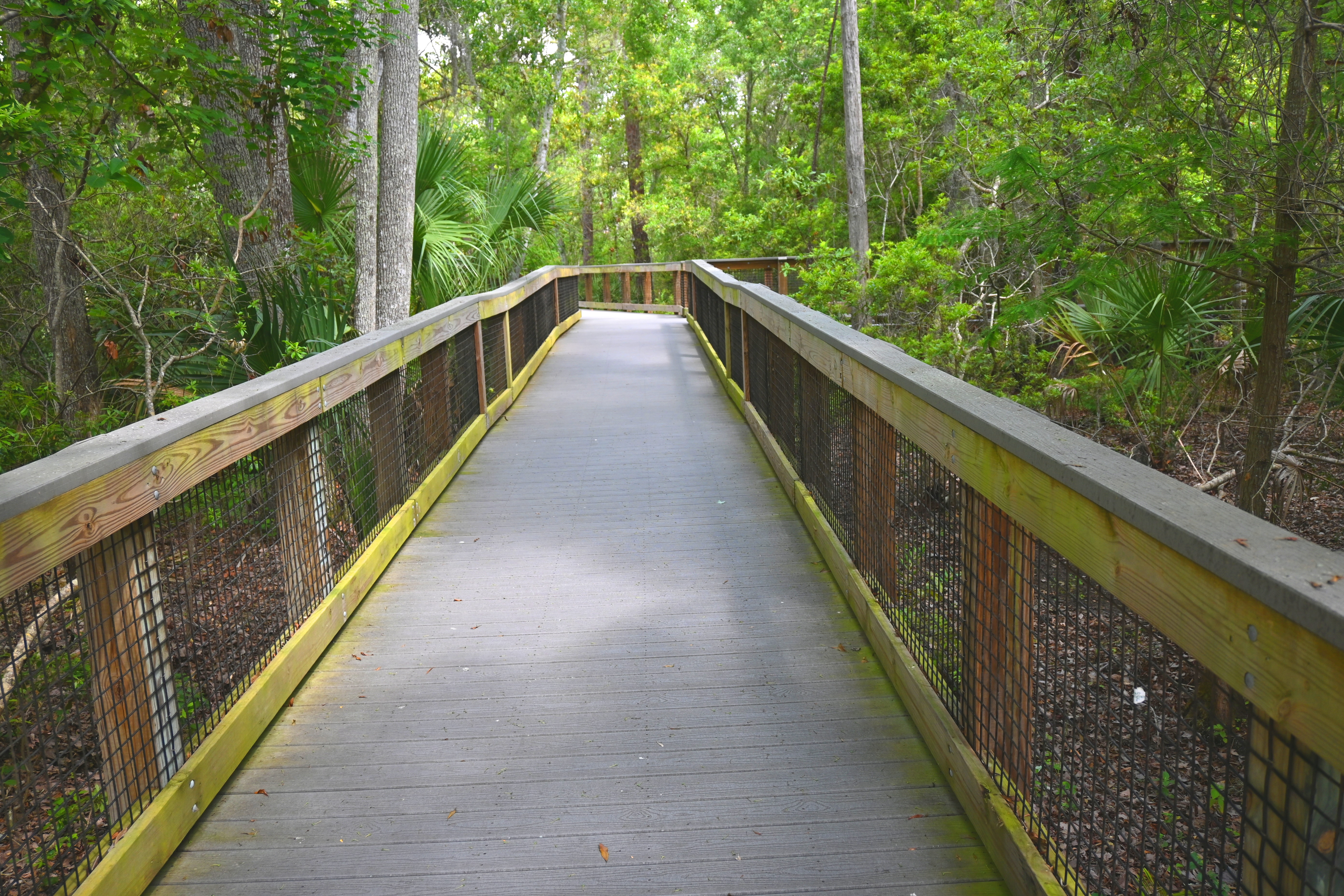
Here is another shot of the boardwalk that ushers you into the rest of the park. It's wide enough for two wheelchair users to get through side-by-side, though you may want to follow each other to allow others, who are walking in the opposite direction, to pass. The wooden boards on the floor are grey, and the handrails on either side are greening. There are trees and ferns on either side.

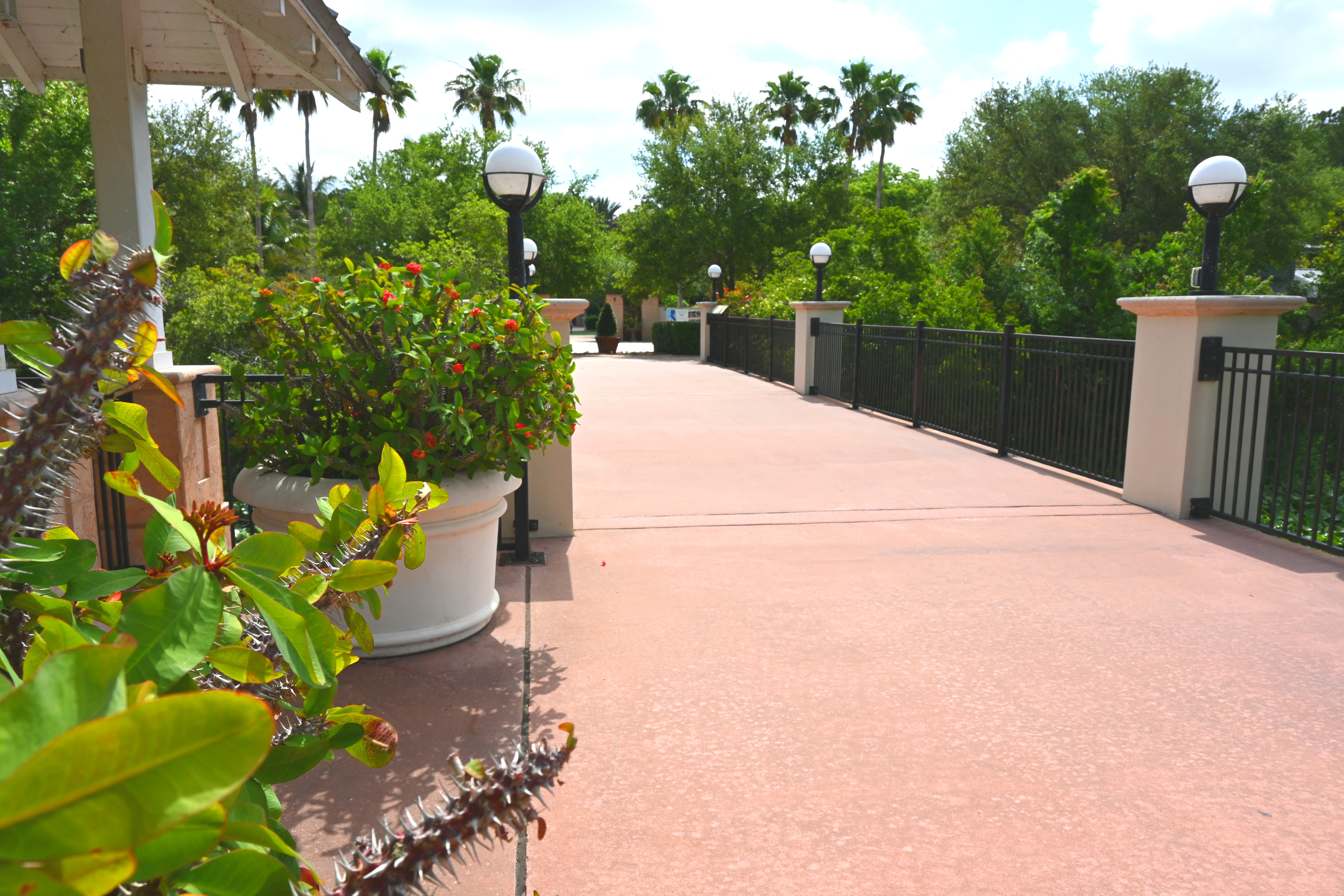
A wide path, which is also a bridge, crosses a river that winds through the park. There are potted plants on the left, surrounding a section that is shaded and has seats. This section is mostly out of the picture's frame.

The aforementioned shaded area, covered by a blue roof. Two potted plants are arranged, one at each side of its entrance. Inside are three benches, one on each side, with a lot of room for people who use mobility devices.

Two pillars, one on each side of the path, are peach-colored and have the words "Wedding Garden" carved into them. The entrance is extra wide, and can fit multiple wheelchair users side-by-side. There are trees on both sides that offer shade. Beyond the entrance, shrubs, trees, and a patch of green turf are visible. All of this is easy for power wheelchair users to navigate, though manual wheelchair users may experience some difficulty rolling over the turf.
Inside the Wedding Garden is a large square, containing a number of beautiful flowers that span along all four of the walls. The floor is made of square pavers that can be a little bumpy, but isn't bad. At the center of the garden is a large section of turf. This area is no problem for power wheelchair users, but may present some difficulty for manual wheelchair users. There are white column through out, and a white chapel located on the left side of the picture.

Here's another broad path that is wide enough to fit a few wheelchair users, side-by-side. Are you starting to see a trend? ðŸ˜‰ It cuts through a section of wood, so that there are trees on both the right and to the left. Behind the trees on the left is a lake, which is slightly visible in this picture. There is leaf litter on either side of the path.

This path isn't too wide, so it may be safer for wheelchair users to follow each other while here. Mulch is spread on both sides of the sidewalk, while trees and shrubs decorate the left and white flowers span the right side. In the distance is a short bridge, which is pretty smooth. After it, the path veers to the left.

A pavilion, which has a picnic table underneath it, is situated in the left side of the frame. "Palm Garden" is displayed in an arch, along the front of its roof. There is plenty of room for a number of wheelchair users to fit under it. Surrounding the pavilion is a paved courtyard. The ground has a stone-like texture, so wheelchairs users may experience a slightly bumpy ride while travelling over it. Beyond the courtyard is a path that is made of hard-packed shell sand. This area is maneuverable for wheelchair users, though it may be a little more difficult for some manual wheelchair users, whether their equipment is self-propelled or push. Keep an eye out for areas where the sand may look soft, which could result in your wheelchair becoming stuck.

This area of sidewalk is where four paths meet. In their center is a reddish circle, with "The Florida Botanical Gardens carved into it. There is a bouquet of flowers between the words "Floida" and "Botanical." The circle has enough space to accommodate a number of people who may be walking along any of these paths, all of which are wide enough to accommodate two wheelchair users side-by-side. The suspended vines, on either side, make it feel slightly sheltered.

Throughout the park, there are a number of lawn chairs that overlook a number of lakes. In this picture, a wide path leads guests along a lakeside. To the left, there are two, white lawn chairs placed underneath a large tree, with a wooden fence in front of them. The ground is bumpy because of tree roots. Because of these barriers, there isn't a great deal of room to accommodate a wheelchair user.

Luckily, there are a lot of lakes in the Florida Botanical Gardens. This area is much more accessible than the last. Though two, white lawn chairs occupy the right side of this space, there is a wide area to the left that is open, where a few wheelchair users can fit. This area feels isolated, surrounded by a variety of trees and ferns. Ahead is a lake, largely blocked from view by some water plants. A fountain is sending water outward, in a wide ring.

This section of pavement is situated next to a lake. It has a stone texture, which is slightly bumpy but isn't too bad. There are blue benches, which face each other, situated on the left and right side of this space. There is plenty of room for a number of wheelchair users between these benches. It's overlooking a lake, though the view is slightly obscured by some trees on the right.

Stationary viewfinders are really cool, especially when they give you a closer look at the far end of beautiful lakes like this one. However, since it is so tall and has such a wide base, it's inaccessible for people who can't achieve either a standing or elevated position. The area surrounding the viewfinder is covered with pavers that are pretty bumpy. In the background is a short, wooden fence, beyond which is a long lake. The shoreline is covered by a dense, green stretch of trees. The water's surface is dotted by lily pads and other, aquatic plants.
Right around the corner from the viewfinder is a courtyard, which contains a few shaded places to rest, as well as some restrooms. The pavers in this section are pretty bumpy, which isn't great for people who use mobility devices. There is a sign that reads, "CAUTION: Uneven Surfaces - Slippery When Wet." For those who have conditions that affect neck control, be careful while going over this area, and maybe ask a person to guide you.
The bathrooms that are located in the aforementioned courtyard aren't the most accessible. Both wheelchair users, and other people who are too short, may have a difficult time reaching the handle to get into the restroom. Since there are no automatic door openers, you may need assistance while entering and exiting. In this picture, though I'm reaching as high as I can, I'm unable to touch the handle. Note that I have really short arms, but a tall torso. However, once you're inside the restroom, the accessible stall is pretty standard.
The cactus garden is really easy to get around. The wide and winding sidewalk makes it easy to see cacti from a variety of angles. This feature is a great idea for wheelchair users, especially since a lot of us aren't very tall, making it tough to take in an entire exhibit. The curved path also makes it easier to navigate and see around other people.
As we've shown in a few pictures above, some areas of the park are separated by bridges. Most of them, including this one, are pretty smooth for wheelchair users. In this picture, Kyle is at one end, looking towards the other side. The bridge's floor is made of wooden planks that are a faded brownish-grey. Each side is made of a grated metal, which is dark grey and either faded or rusting in areas. There are eight white globes, four on each side, that are set apart an equal distance from each other and spanning the entire length of the bridge. Trees are on both sides of the bridge.
There are areas in the Florida Botanical Gardens that are only accessible via various trails. Though these aren't made of concrete, they are made of hard-packed sand. There is a tiny bump to get onto the path, but it's extremely small. The sand may be a little bumpy, but definitely is not jarring. There are trees on either side of the path. My power wheelchair is on the left side of the picture. It has a white frame. The front tires are on the hard-packed sand, while the rear tires are on the concrete.
Here, you can see myself and my entire wheelchair. I'm driving on the hard-packed sand, which I mentioned in the previous picture. Grass and palm trees are on my right, while dense trees are to my left.
In this shot, I'm exiting one of the wooden paths and entering one made of hard-packed sand. All of my tires are still on the wood, but the front casters of my wheelchair are poised on the edge. There is a very slight dip, which is barely noticeable.
To enter and exit the park, you'll need to go through a lobby that houses a gift shop, as well as some restrooms. There's a koi pond to the left of the exit. There is a shirt rack, filled with hanging shirts, outside of the gift shop. Both entrances (or exits) are equipped with power doors, which can be operated by large buttons.
In this shot, I'm in the aforementioned lobby, standing in front of the bathroom doors. They are push-to-enter, but must be pulled to exit. If either of these actions are difficult for you to perform on your own, it may be best to ask for assistance.


Author & Producer:
Kyle Romano

Photographer:
Luis Rodriguez

Wednesday, December 1, 2021

Vaccinating For The Holidays

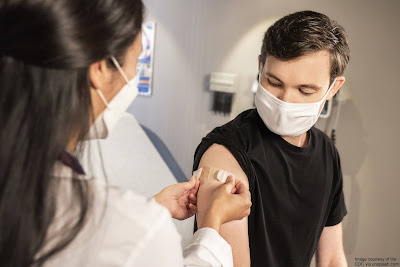
A man in a black shirt, and wearing a blue hospital mask,has his right sleeve rolled up. He looks down as a medical professional, positioned in the left side of the frame, applies a Band Aid to his exposed shoulder. She is facing away from the camera, but is wearing a white lab coat, a blue hospital mask, and has long, brown hair.
From cooking, to dressing, to working, to even caring for my dog, life as a wheelchair user requires
so much preparation. Whether I’m at home or going to hang out with friends, accessibility dictates the way that I, and other disabled people, have to live our lives. These feelings can be overwhelming. Trust me when I tell you that the holidays can cause us more stress than we usually experience, especially when it comes to accessibility-related anxiety. For example, whenever I go to somebody’s home, my mind frantically tumbles through a checklist. Can I get my wheelchair into the house for Thanksgiving dinner? Once I’m inside, do I fit at the kitchen table? Can I make my way around the globs of people and furniture, into the sitting area to talk with my family and friends? Sweat starts to bead across my temple as I wonder: Will my wheelchair fit into the bathroom?

In the past, we’ve written pieces about the physical accessibility of homes, and how to accommodate wheelchair users for holidays and other events. This year, we’re taking a slightly different approach. At this point, I know that you’re probably sick of reading and/or hearing about COVID-19. As a disabled person who loves spending time with my family during the holiday season, I am inclined to go over a few key details regarding measures that I’m taking to ensure my own health and safety.
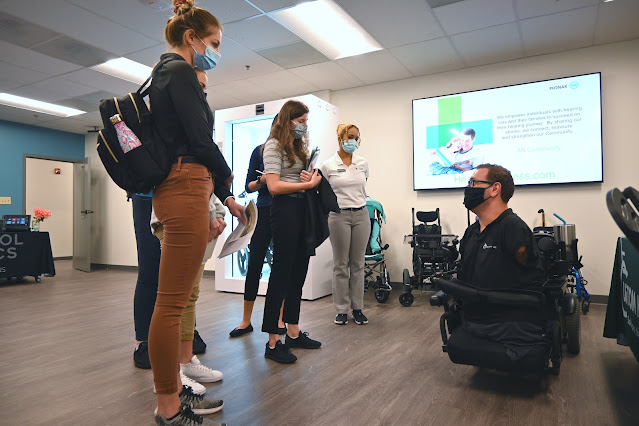
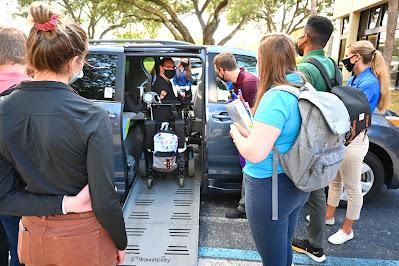
Kyle sits in his wheelchair in the right side of the frame. He is wearing a black, collared shirt and a black face mask. The seat of his wheelchair in its downward positioned, only a few inches from the floor. Five masked students look at him as he talks about the seat functions of his wheelchair.

For those who may not know, I’m a quad-amputee. While I’m not technically immunocompromised, my body holds significantly less fluid than those of you with your arms and legs. Other than my lack of limbs, and though I’ve had some pesky allergies creep up over the years, I’m actually in very good health. Curse you, dust and pollen! Unlike myself, there are a lot of disabled people who are immunocompromised, and have other conditions that make it easier for them to get sick. When we’re talking about COVID-19, how do you think their conditions have affected the way that they live their lives? How do you think it’ll impact the way that they spend the holidays.

COVID-19 has obviously changed the way that we live. Who would’ve thought that we’d ever have to wear a mask into a grocery store, or stay six feet away from people in line? I certainly wasn’t prepared for this reality, and will be the first to tell you that it absolutely sucks. Because of the pandemic, I’ve had to pay particularly close attention to the way that I live my life. I’ve also had to be really careful about the people that I’m around, especially those who I’m around on a regular basis. I certainly can’t afford to occupy space with people who have not been vaccinated.

To top things off, I have to pay very close attention to the way that I handle myself in public. Since I don’t have hands, I usually use my mouth to pick up my phone or access my car keys. If I’m by myself, I feel extreme pressure to make sure that I don’t drop anything. Whenever I drop anything while I’m out and about, people are very nice about helping me retrieve the item I’ve lost. Usually, I’m super thankful for their help. However, and in lieu of COVID-19, I’m not keen on strangers retrieving things like my dropped phone or car keys.

When you’re around others, it’s also important to wear a face mask. In the spirit of this blog post, let me issue you a challenge: try to put on your face mask without using your hands. Go ahead. I’ll wait. Remember how I use my face to access my phone or car keys? Both of those become increasingly difficult while I’m wearing a face mask.

Since all of these precautions seem like such a pain, you may ask yourself, “Why does he bother?” To put simply, I care deeply about the lives of other people. Currently, I’ve been vaccinated for COVID-19, have received my booster, and regularly wear a face mask. None of these experiences have been enjoyable. Regardless of how I may feel, or how inconvenient it may be for me, I do whatever I need to in order to prevent the spread of COVID-19. Taking these precautions ensures that I keep my grandparents safe, as well as my aunts, uncles, cousins, mom, dad, and brother, all of whom assist me with my daily care. There are also a number of disabled people who, due to health complications, don’t have the luxury of getting vaccinated. We need to do everything we can to make sure that individuals like these are protected. That means: if you can get vaccinated, doing so will prevent immunocompromised people from getting sick and further spreading the virus.

Getting vaccinated, maintaining social distance, and wearing a mask in public are all very important ways to prevent the spread of COVID-19. With variants on the rise, including the newly identified Omicron, maintaining these safety measures is more important than ever. For the health and safety of disabled people, it’s even more important that we follow this protocol. Remember that disability comes in a variety of shapes and sizes, so you never know who may be immunocompromised, and therefore might not be able to get vaccinated for COVID-19. By protecting yourself, you’ll protect the rest of us.

Author & Producer:
Kyle Romano

Kyle and his boss Scott are shown together, behind a green Custom Mobility table cloth. Scott is on the right side of the frame, with his arm around Kyle's shoulders. Scott is wearing a royal blue collared shirt and Kyle is wearing a black, collared shirt, both of which have the Custom Mobility logo. Both are also wearing black face masks.


Friday, October 22, 2021

🎃 Having A Happy & Accessible Halloween 🎃

Whenever I think about Halloween, I’m immediately transported back to my childhood. I can feel the golden sunlight paint my forehead and the cool breeze brush against my cheeks. My brother and I are playing in the cul de sac, dressed as Michelangelo and Donatello from the Teenage Mutant Ninja Turtles, while one of our friends is dressed up as a zombie, and our other friend wears a Power Ranger costume. This scene seems pretty typical, right? In your mind, does it change at all when I tell you that I was zooming around the street in my power wheelchair?

Halloween is fun for children with and without disabilities. My friends never treated me differently, and helped me work around areas that weren’t accessible. If there was a car blocking the walkway to the front door, I’d wait on the sidewalk where the owner of the house could see me. I’d sit patiently, a smile blooming across my face, as my brother approached the front door and rang the doorbell. Whenever the door opened, my brother would point in my direction and mouth something that I couldn’t hear. Then he’d mosey down the driveway, the adults following just behind. I would tell them “Trick-or-Treat!” and they’d drop a few pieces of candy in my bag.

Regardless of their disabilities, we want our children to enjoy this holiday as much as possible. Unlike my experiences, many children have sensory sensitivity, especially those with autism or other types of cognitive disabilities. To make sure that these trick-or-treaters feel as comfortable and safe as possible, it can be helpful to slowly introduce them to Halloween-themed decorations and costumes. And just in case you need a few pointers, here are some tips to help you get ready for the spookiest day of the year.

Preparation

If your child has sensory aversions, try to be as careful as possible, and mindful of any triggers that they might have. Here is some advice for teaching them in a patient, accepting, and safe environment.

  • Spiderwebs, ghouls, and shrieking goblins: As decorations begin popping up around town and in school, telling stories from your own childhood may help to alleviate some tension. Make sure not to expose your child too quickly, or to too many of these at once, since that could result in something like sensory overload. It may not seem like it, but be mindful that this can actually be painful for autistic people.
  • Superman, monsters, witches: By visiting stores with costumes on display, by browsing catalogs filled with Halloween characters, or by playing dress-up at home, you can learn about your child’s preferences, what they like, what makes them uncomfortable, and how to help them navigate that space. It might help to explain that costumes are made up of clothing and props, and that they don’t involve magic or don’t have to be scary.
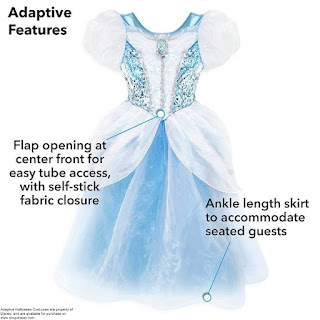
  • Masks: Halloween masks can also make children uncomfortable. If your child feels uncomfortable either wearing a mask, or being around people who are wearing them, they might be afraid because they no longer recognize their family and friends. As you can imagine, this can be not only terrifying, but also disorienting. Try to look for masks that your child is comfortable wearing. You can even have him/her test out their mask and costume by looking at themselves in a mirror, and by making sure that they know you’re there. For some children, a simple game of peek-a-boo with a mask can also help them feel more  comfortable. If your kid enjoys art, helping them to create their own masks can also help.
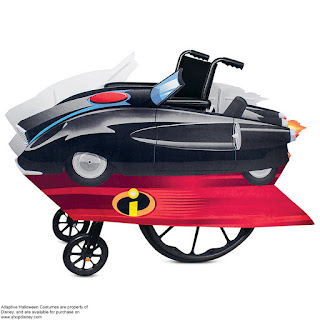
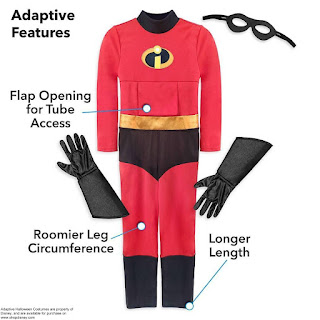
  • Finding an accessible Halloween costume: If you’re searching for an accessible costume for your little trick-or-treater, it’s important to pay attention to any sensory aversions that they have, as well as any adaptive equipment that they use. There are actually some great accessible costume lines, some of which even transform wheelchairs into fantastic props, such as a spaceship or a car. Other costumes have pockets or cutouts that will still allow you to access feeding tubes and other equipment. These designs are also tag-free, and made from materials that are less abrasive to children with sensory sensitivities. Target and Disney even offer accessible costumes that feature popular characters, such as Disney princesses and characters from their popular movie “The Incredibles.”

Click here to see some great, and sometimes funny, DIY costume ideas for people with disabilities!

Plan Ahead

1. Is It OK To Avoid Crowds? – Of course! Crowds aren’t everybody’s favorite or ideal situation, and may be especially triggering for people with disabilities. For kids with a variety of disabilities, crowds can be loud and overwhelming. Noisy, unfamiliar events can be overstimulating for autistic children, which can be extremely painful, uncomfortable, and impossible for them to endure. To help your child have a great time, in a way that accommodates their needs, here are a few ideas:

Instead of participating in trick-or-treating areas that have a lot of traffic, it may help to travel to areas that aren’t as busy. If your child and their friends would be open to starting earlier, this may cut down on the amount of traffic that you’ll have.

Search for Sensory Friendly events, either online or through friends and other parents. If you don’t have any near you, maybe you and some other parents could even start your own!

You can avoid the crowds by staying home, watching fun Halloween movies, and even making your own, Halloween themed desserts.

It’s also an option to allow your child to give out candy from home. That way, they can experience the holiday at their own pace, and might help to familiarize them with Halloween from a distance, in an environment that is already comfortable.

2. The Perfect Amount of Time – Too many events, or events that are too long, might be incredibly overwhelming for some children with disabilities. What are some ways you can enjoy the holiday, that aren’t over-stimulating?

Haunted houses can be a lot for anybody, but can be especially stressful for people with disabilities. Some more accessible options can include less-stimulating activities like corn mazes, hayrides, or even a trip to a Halloween store. And if possible, as mentioned in our other examples, to avoid crowds, plan to go during a time that is less busy.

Depending on the type of event, you may want to ask some questions before RSVPing “Yes” to a Halloween party or event. You can ask about the number of guests, whether music will be played, or even about things like strobing lights.

3. Be Patient With Your Child And Yourself – Sometimes special needs children won’t enjoy dressing up and participating in the event you have planned. Be patient and come up with alternative costume options or start new traditions that are more comfortable for your child.

 As much as you want them be actively involved,  remember that Halloween might just be too much. Keep your child comfortable by allowing them to have a voice and tell you what they like or don’t like.

Try to find good ways to connect with your child. If something about the event might spark some interest for a short amount of time, it might be easier for you to enjoy the event with them.

It doesn’t all have to go as planned or the way you imagined. Having a special needs child doesn’t mean that you can’t enjoy Halloween, you just have to come up with different ways to enjoy it with your child in a way that is comfortable.

4. Mapping Out a Trick-Or-Treating Plan

Role-play- Acting things out can help your child prepare for Trick-Or-Treating, may even be fun in the process. By using a door in your house, you can practice things like how to knock on a door or ring a doorbell, what to say when a door is opened, how to thank the person, as well as the correct time to say goodbye and leave.

Discuss the language your child may encounter- Since we don't go around yelling “Trick-Or-Treat!” during any other time of the year, talking about it could help them adjust to this new phrase. After all, people only Trick-Or-Treat on Halloween, so it might help to point that out to your child.

Create an itinerary beforehand- Some children, especially those on the spectrum, feel much more comfortable when they have a schedule to follow. If they aren’t keen on Trick-Or-Treating planning to go out for a few minutes, just to visit a few places, could be a great place to start.

Do a walk-through of the neighborhood ahead of time- This part can also be fun, and can give your child a sense of security and control. By choosing which houses you’ll visit, it may alleviate any uncertainty or anxiety that your child is feeling. It could also help to speak with your neighbors before visiting their houses. If they don’t know about your child’s disability, this may offer a great opportunity to speak with them about it.

These tips are a great starting place for any parent, who has a child or children with disabilities. Hopefully, they help you to have a more inclusive holiday that your child will love.

Click here for a few more tips!

Credits

SYNERGY HomeCare from a blog post written in 2018

NYMetroparents.com: "Celebrate Halloween In An Accessible Way"

Authors


Mary Carol Peterson


Kyle Romano


Editing & Production

Kyle Romano
Kiley Griggs and The College Quest

For many people, attending college is viewed as a rite of passage. F rom TV shows, to movies, to books, and everything in between, w e'r...